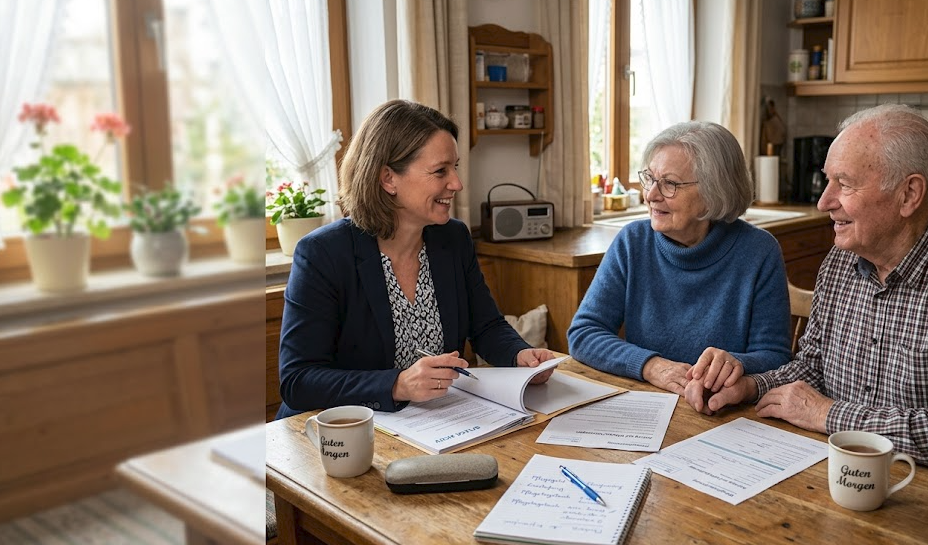
Applying for a Pflegegrad — without bureaucratic dread
What you need for a Pflegegrad application, how the home assessment works, and the mistakes to avoid. Written for family caregivers without prior care experience.

If years in elderly care taught me one thing, it’s this: the Pflegegrad application is half as scary once you know what’s coming. Let me walk you through how I did it for my own family member.
What is a Pflegegrad?
A Pflegegrad is the official rating of how much support someone needs in everyday life. It runs from 1 (mild impairment) to 5 (severe impairment with special needs). Each level unlocks cash and in-kind benefits — the Pflegebox is one of them.
Important: A Pflegegrad isn’t tied to age. Younger people with disabilities or chronic illness qualify too.
Step 1: Filing the application
Call the Pflegekasse of the relevant statutory health insurer, or write a short letter. One sentence is enough:
“I hereby apply for benefits from the long-term care insurance for [name, date of birth].”
You’ll receive an official form by post. Note the date of your call or letter — benefits are calculated from that day, not from the assessment.
Step 2: Care diary (optional, but I strongly recommend it)
For two weeks, write down daily where the person needs help: getting up, dressing, eating, bathroom, medication, orientation, social contact. Also what doesn’t go well.
This is the single most important preparation. On assessment day people often have a good day — without records, the actual need gets systematically underestimated.
Step 3: The home assessment (MD)
The Medical Service (MD, formerly MDK) comes to the home. It takes about 60 minutes. Who should be there:
- The person being assessed
- A trusted person (family caregiver or care worker)
- Ideally someone who knows the daily routine
The assessor goes through six areas (mobility, cognition, behavior, self-care, dealing with illness, daily life). Answer honestly — describe what happens on bad days, not only good ones.
Step 4: Decision and appeal
The decision arrives after 4–8 weeks by post. If the level is lower than expected: you can file an appeal within one month, and these appeals often succeed. Don’t be discouraged.
Common mistakes
- “It’s still manageable.” Be honest in the application, even if it feels like you’re “diminishing” the person. This is about support, not judgment.
- Going to the assessment alone. A second person catches forgotten details.
- Skipping the care diary. Without records, the need gets underestimated.
Once the Pflegegrad is approved, the Pflegebox (see our order guide) is the simplest first step toward real daily relief — free of charge, no further application required.